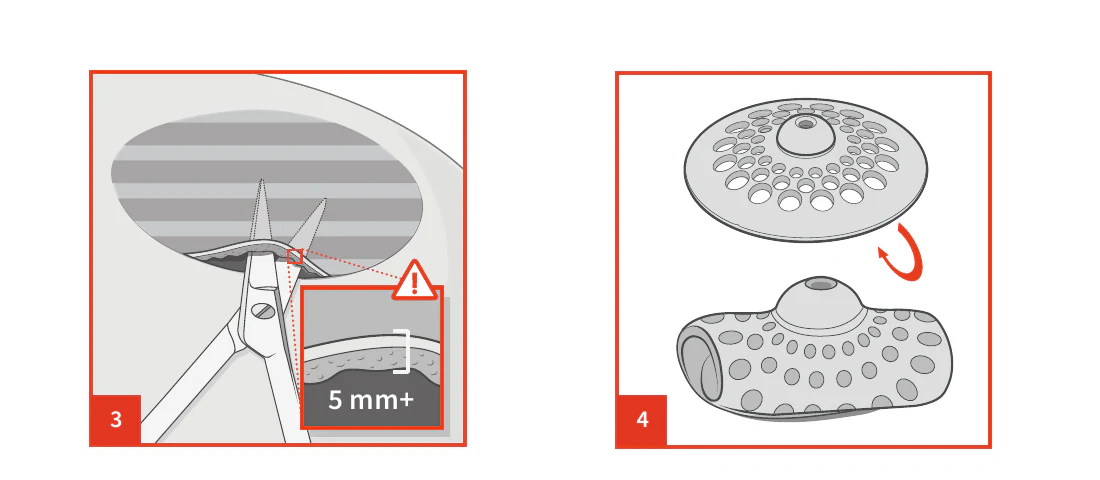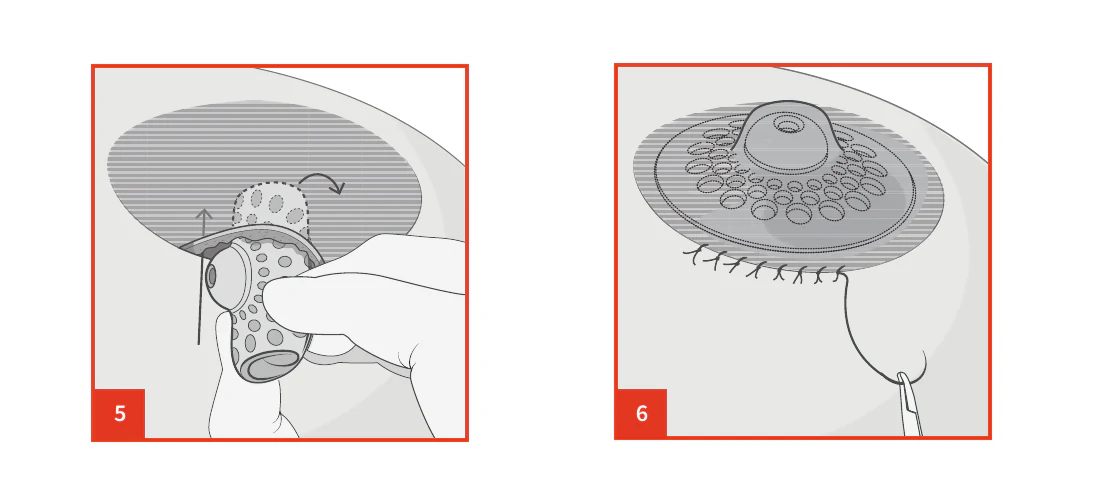
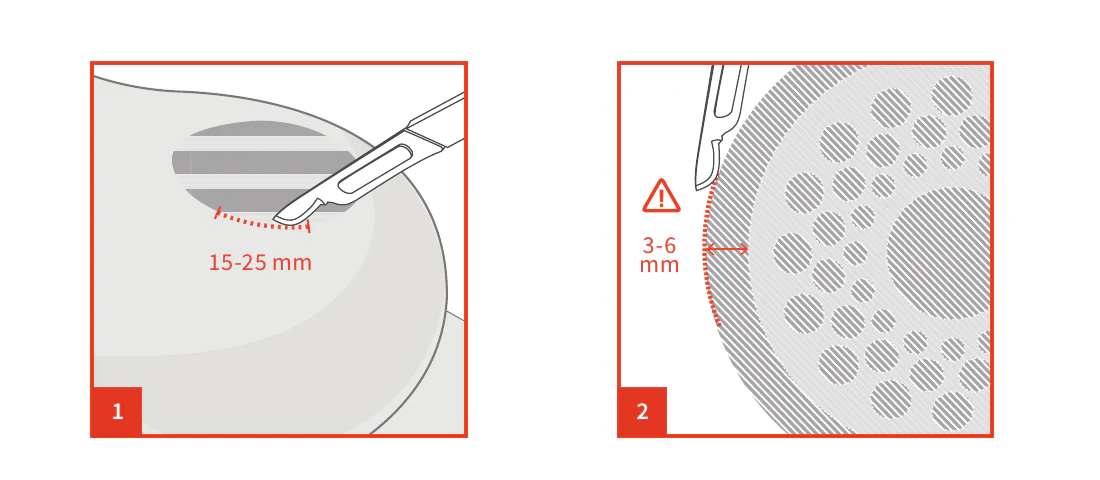
A small incision. Under anaesthesia decided by your surgeon, a small incision is made where the new nipple will sit.

The procedure
A small-incision procedure planned around your needs. Anaesthesia and the care setting are decided by your surgeon.
The procedure
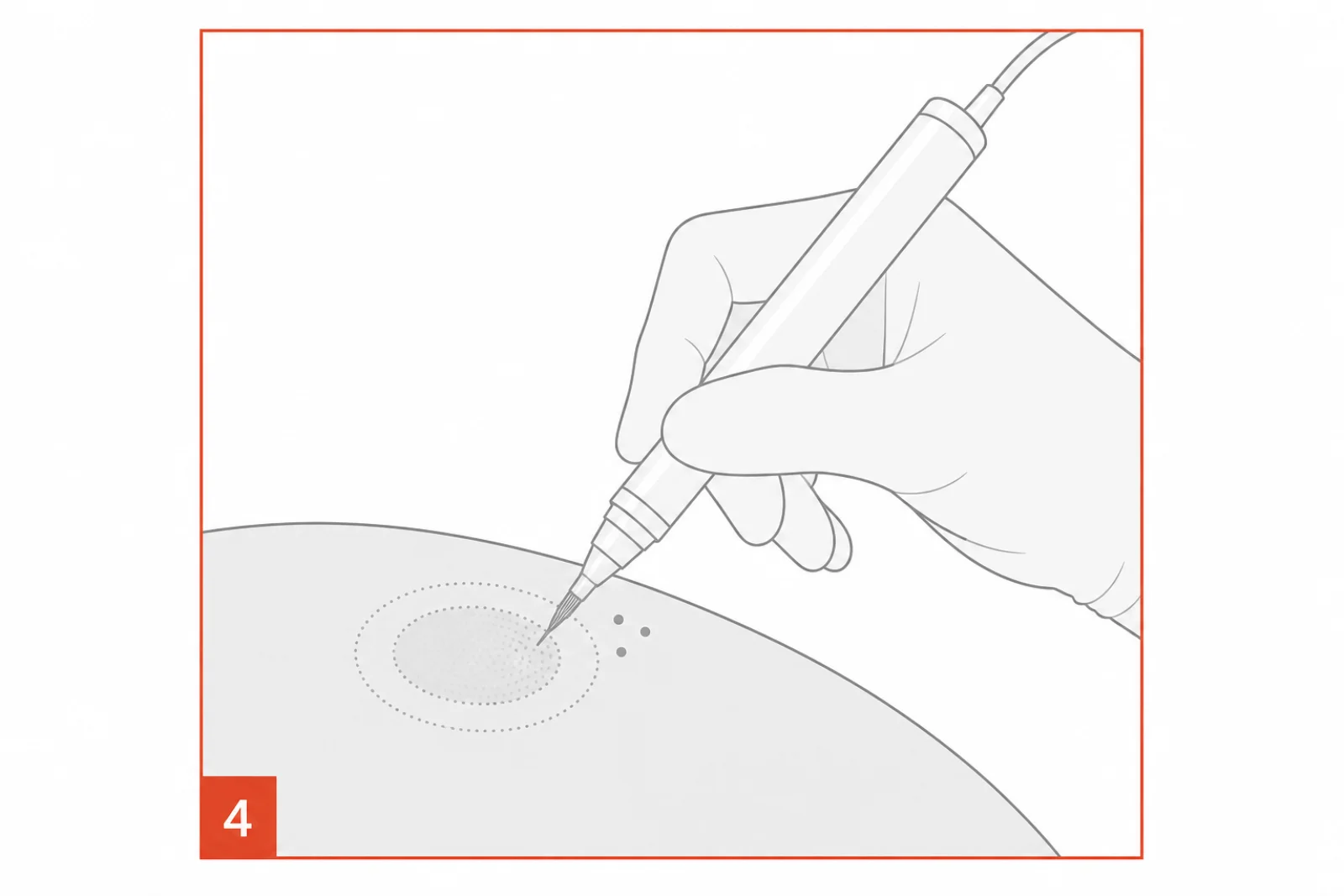
Illustrations 1 to 3 from the official product brochure; step 4 is a placeholder illustration. Your surgeon sets the timing of each step.
Your route to FixNip
From signing up on this site to the colour of the areola, in the order it happens.
Get the full picture
Sign up below and confirm your e-mail address; The Full Picture, with the photos and the published studies with their limits, arrives in your inbox.
Sign upFind a trained surgeon
Surgeons trained in the FixNip NRI procedure, by province and city.
Search the mapThe consultation
Your surgeon examines the site, checks timing and tissue, and decides together with you.
The procedure
A surgical procedure through a small incision. Anaesthesia and the care setting are decided by your surgeon. In the first clinical study, the average procedure time was 20 min per breast, under local anaesthesia. Evidence
Healing, then colour
Recovery varies. Colour can follow after healing, at least 6 months after the implant, if you choose it: a medical tattoo artist adds the colour of the areola and nipple once your surgeon confirms the site has healed.
Tattoo directoryAfter the procedure
From the day of the procedure to the colour, and who looks after you on the way.
Home when your care plan allows.
Depending on your care plan, you may be able to go home on the day of the procedure. Where stitches are used, they generally come out after about 7 to 10 days. You get care instructions for the site.
Healing time.
The perforated silicone is designed for anchoring to the adjacent fat tissue. Recovery varies from patient to patient. Your surgeon gives you instructions for wound care, showering, physical activity, return to work and return to sports, and may recommend temporarily avoiding pressure on the site, sleeping on your stomach, tight garments, heavy lifting and contact sports. No mammography in the first 2 months; show your Implant Card to the screening team.
Your surgeon checks the result.
Your surgeon schedules follow-up visits as needed to monitor healing and the reconstructed nipple. The number and timing of visits may vary depending on your recovery.
Colour, if you choose it.
Colour can follow after healing, at least 6 months after the implant, if you choose it, and only once your surgeon confirms that healing is adequate. A medical tattoo artist adds the colour of the areola and nipple. 100% of patients were satisfied with nipple colour after tattooing. (n=30) Evidence
Risks
Like any procedure, FixNip NRI has possible complications, and it is not right for everyone. Your surgeon goes through them with you before you decide.
When it is not used.
A known sensitivity to nickel or titanium, tissue at the nipple site that is not thick enough, an active infection, pregnancy or breastfeeding.
Possible complications.
Infection, pain, skin or tissue necrosis, the implant becoming exposed or pushing through the skin, the implant moving from its position, a nipple projection that is less or more than expected, capsular contracture (scar tissue tightening around the implant) and changes in sensation.
Before you decide.
Some complications need further treatment, an additional procedure or the removal of the implant. Tell your surgeon about previous radiation, breast implants or surgical mesh. Mammography should not be performed within 2 months after implantation. There are also ways to reconstruct the nipple without an implant. Your surgeon explains the risks, the alternatives and the aftercare.
All risks and the medical noticeGood to know
This product may not be right for you. Talk to your healthcare professional.Risks and medical notice
A 13-page guide to your nipple options, to read at home.
PDF · by e-mail, in about a minute